In this article
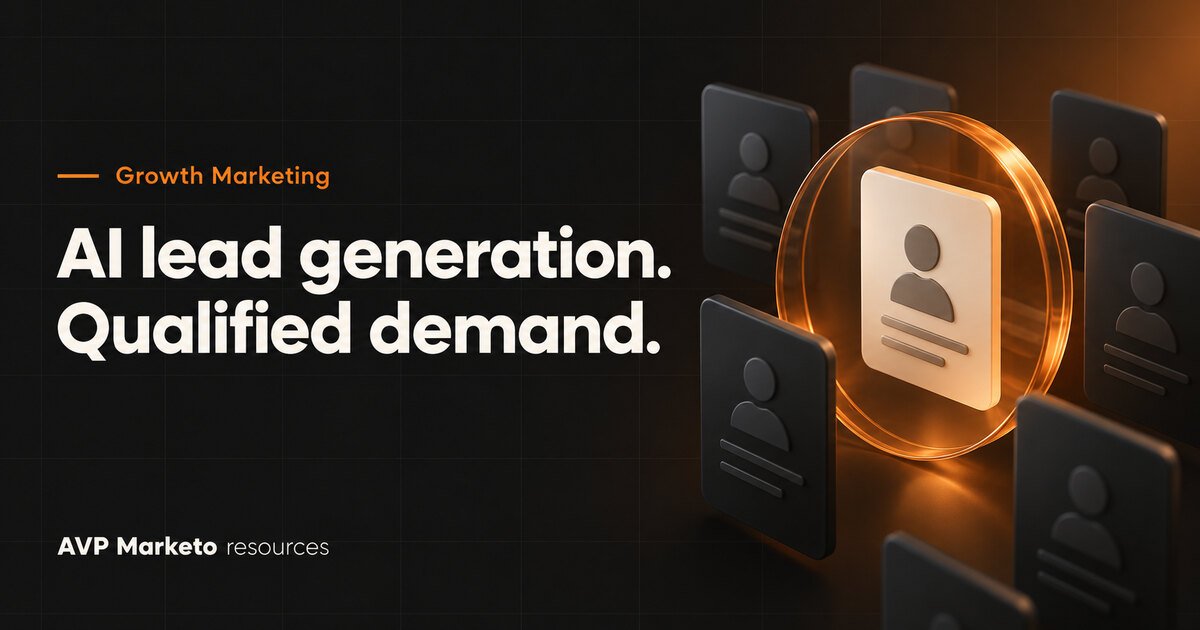
AI lead generation uses artificial intelligence to support audience research, lead capture, qualification and follow-up preparation. A useful process distinguishes a contact from a qualified opportunity, verifies important information and keeps people responsible for outreach decisions. Success should reflect suitable sales conversations and customers, rather than the size of a generated list.
The first question is who your business is able to serve well. Without a clear answer, AI accelerates list building while sales spends more time rejecting the results.
Define fit before collecting more contacts
Write the characteristics of a suitable customer. Include the service need, geography and practical requirements affecting whether the business is able to help. For B2B work, add the relevant company context and buying roles.
Also define exclusions. A person researching a subject for study or a business outside your service area might engage heavily without being a suitable prospect. Recognizing exclusions protects the sales team's time and the recipient's experience.
Keep the definition specific enough for a reviewer to apply consistently. “Ambitious growing companies” does not provide a dependable qualification rule.
Separate fit from intent
Fit describes whether the prospect matches your offer. Intent describes evidence of interest or a current need. A suitable company reading a general article and an unsuitable company requesting a quote need different treatment.
HubSpot's lead-scoring guidance distinguishes record properties from engagement actions. The distinction helps prevent activity from overshadowing whether the lead suits the business. [1]
| Fit | Evidence of intent | Suggested next action |
|---|---|---|
| Strong | Specific service request | Human review and timely relevant follow-up |
| Strong | General educational activity | Useful nurture matched to the topic |
| Unclear | A promising request | Ask for the missing qualification detail |
| Weak | High activity | Review the exclusion before escalating |
These are suggested routing decisions, not a universal scoring model. Define the rules around your own service and sales process.
Use AI to organize evidence
AI is useful for summarizing supplied company information, identifying missing fields and comparing records against stated criteria. Preserve the source and date for claims affecting a qualification decision.
Ask the system to return an explicit “unknown” when information is missing. Inferring budget or buying authority from a job title creates a fragile basis for outreach. A confident narrative is not verification.
For company research, prioritize original public sources and approved data providers. Respect site access rules and the permissions governing the data. Do not design the process around bypassing platform restrictions or guessing private contact details.
Build a useful lead record
A dependable handoff needs more than a name and an email address. Record what the person requested, what the business knows and what still needs clarification.
Use a compact structure: verified contact and company details, source of the request, evidence of fit, evidence of intent, unresolved questions and the next owner. Add the time of the relevant activity so old signals do not look current.
Keep sensitive or unnecessary personal information out of the record. Review your data handling and applicable marketing requirements before expanding collection or automated outreach.
Treat AI scores as decision support
Predictive scores depend on the data and outcomes used to build them. Historical mistakes and inconsistent sales labels weaken the signal, even when the scoring interface looks precise.
HubSpot documents AI-supported fit and engagement scoring with specific product requirements. If using such a feature, verify eligibility and understand the record properties behind the recommendation. [2]
Start by comparing a sample of high-scoring leads with the sales team's judgment. Review accepted and rejected examples. Ask why the two assessments disagree before using the score to trigger a broad sequence or prioritize every account automatically.
A score expresses a model's assessment. The number does not prove current intent, permission to contact or a likelihood of purchase for an individual prospect.
Prepare outreach around a verified reason
Relevant outreach begins with a credible connection between the offer and the recipient's context. Ask AI to draft from the evidence, rather than invent a problem to create an opening line.
For example, a company publishing a request for help provides a different reason to contact than a company merely appearing in an industry directory. Explain the actual context honestly and make the next step proportionate to the relationship.
Have a person review first-touch messages, sensitive claims and unusual cases. Keep sending permissions separate from research permissions. A system authorized to prepare a draft is not automatically authorized to send the draft.
Connect qualification to delivery and preferences
Operational safeguards matter after the message is drafted. Maintain suppression and unsubscribe handling, avoid duplicate sequences and route replies to someone responsible for the conversation.
Google's email sender guidance includes authentication and subscription expectations for personal Gmail delivery. Check the requirements relevant to the actual sending program rather than treating AI personalization as a substitute for sound email operations. [3]
The same discipline applies to inbound leads. A person receiving several inconsistent responses because multiple workflows fired has experienced a process failure, regardless of how quickly the first message arrived.
Measure acceptance and progression
Follow the records through useful stages. Track leads reviewed, sales accepted leads, suitable meetings and eventual opportunities or customers where the data supports the connection.
Use stable definitions. If the team changes what “qualified” means midway through a comparison, record the change. A higher qualification rate might otherwise reflect a weaker standard rather than better acquisition.
Review rejection reasons as well as the totals. Out-of-area requests, unclear needs and inaccurate company information indicate different fixes. AI helps organize the patterns, while people choose the response.
An illustrative qualification workflow
Consider a B2B service business receiving both project requests and general research questions. AI summarizes each submission against an approved fit checklist and flags missing information. A human reviewer handles ambiguous or valuable requests.
Straightforward routing rules assign an owner after the decision. Educational requests receive the resource they asked for, while accepted opportunities receive relevant follow-up. The team records why each request was accepted or rejected.
The improvement to evaluate is a clearer handoff and more relevant sales activity. No generated list size or score demonstrates commercial success on its own.
Frequently asked questions
Does AI lead generation mean fully automated cold outreach
No. AI supports research, capture and qualification as well as drafting. Many useful workflows end with a reviewed recommendation or handoff. The appropriate level of automation depends on evidence quality, permissions and the consequences of an incorrect action.
What is the difference between a contact and a lead
A contact is a record of a person or organization. A lead has a relevant connection to your offer or an expressed need worth assessing. A qualified lead meets your defined criteria. Keep those categories separate in reports and workflow rules.
How should a business evaluate an AI lead score
Compare the score with verified fit, recent intent and actual sales outcomes. Review exceptions and rejected records, not only apparent successes. Start with decision support and retain human review where the data is incomplete or the consequence is significant.
Improve qualification before increasing volume
AVP Marketo combines AI-supported research with human commercial judgment. Book a free AI growth audit to review the path from audience selection to a useful sales conversation.